
The Nonturismo Walk to discover the Emilian Apennines through the voices of those who stayed
19 May 2026
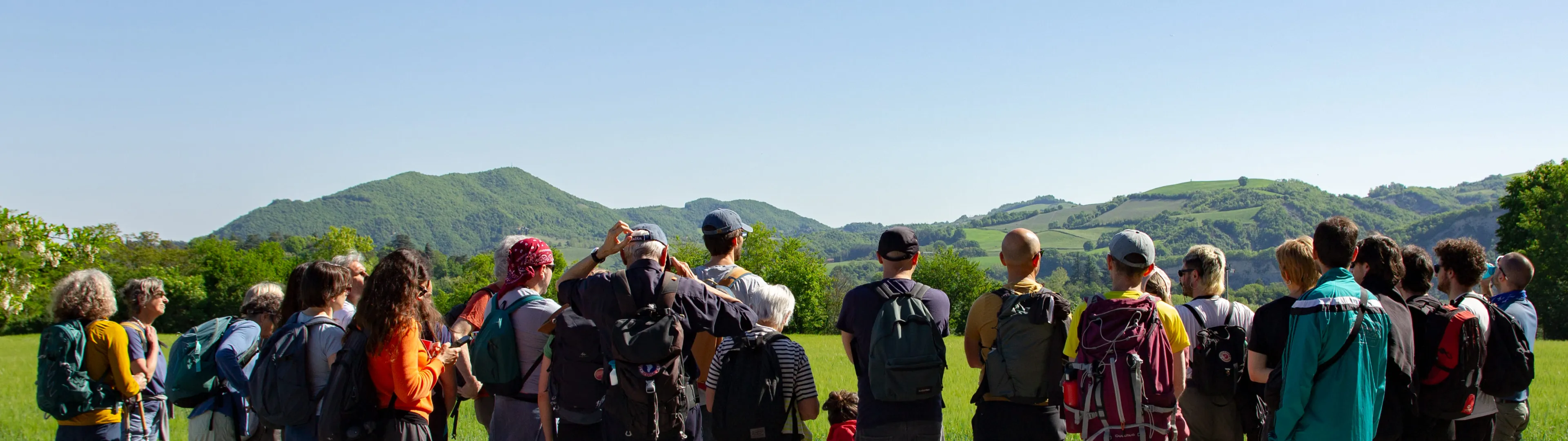
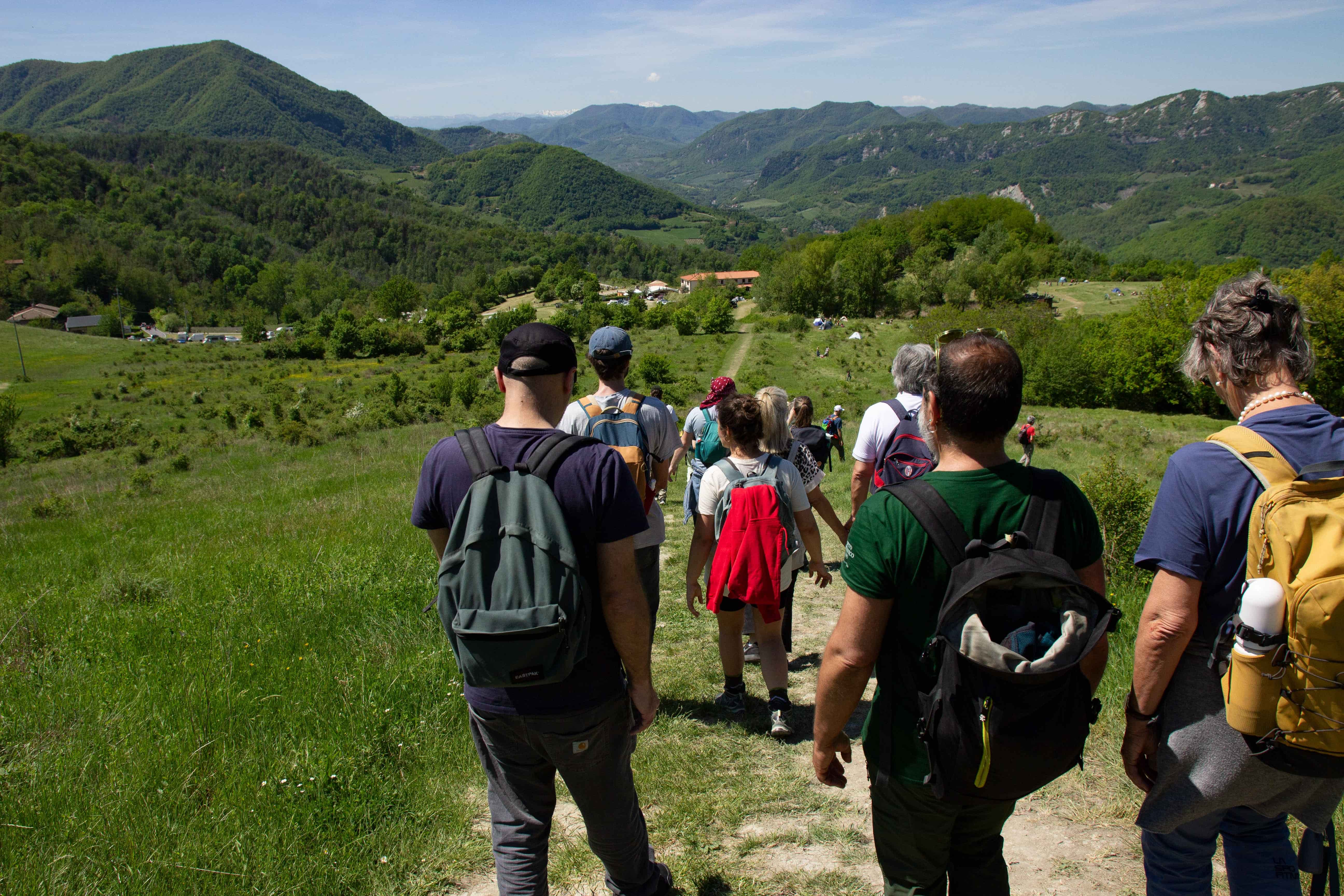
On 26 April 2026, a group of walkers set off from the railway station of Pian di Venola along the Sentiero del Postino, guided by Wu Ming 2 and the community editorial team of the Nonturismo guide to the Terre del Reno, Setta and Sambro. Six kilometres and three reading stops - at the Church of Sperticano, the Ruins of Caprara di Sopra, and Il Poggiolo – Rifugio Re_Esistente - to discover the landscapes of the Emilian Apennines through the voices and life experience of those who chose to stay.
The guide: a community voice for the Emilian Apennines
Terre del Reno, Setta e Sambro is the seventh guide in the Nonturismo series (Ediciclo Editore), produced by Sineglossa and edited by Wu Ming 2, with illustrations by Alexia Tzimas. Written by people who live in the area and coordinated by anthropologists Eleonora Adorni and Brenda Benaglia, the guide explores three valleys of the Emilian Apennines through a community editorial process, gathering the voices of workers, environmental guides, activists, artists, and geographers.
At the heart of the guide is a specific genius loci, a theme which defines the territory in an unique way, the spirit which animated the walk. In the Emilian Apennines, this genius loci lies in the concept of brigoso: arduous, difficult, complicated - and yet, a quality that also means committing oneself, inventing solutions, and choosing to remain.
The guided walk was organised by Sineglossa together with Il Poggiolo – Rifugio Re_Esistente and Cooperativa Madreselva, which provided official hiking accompaniment.
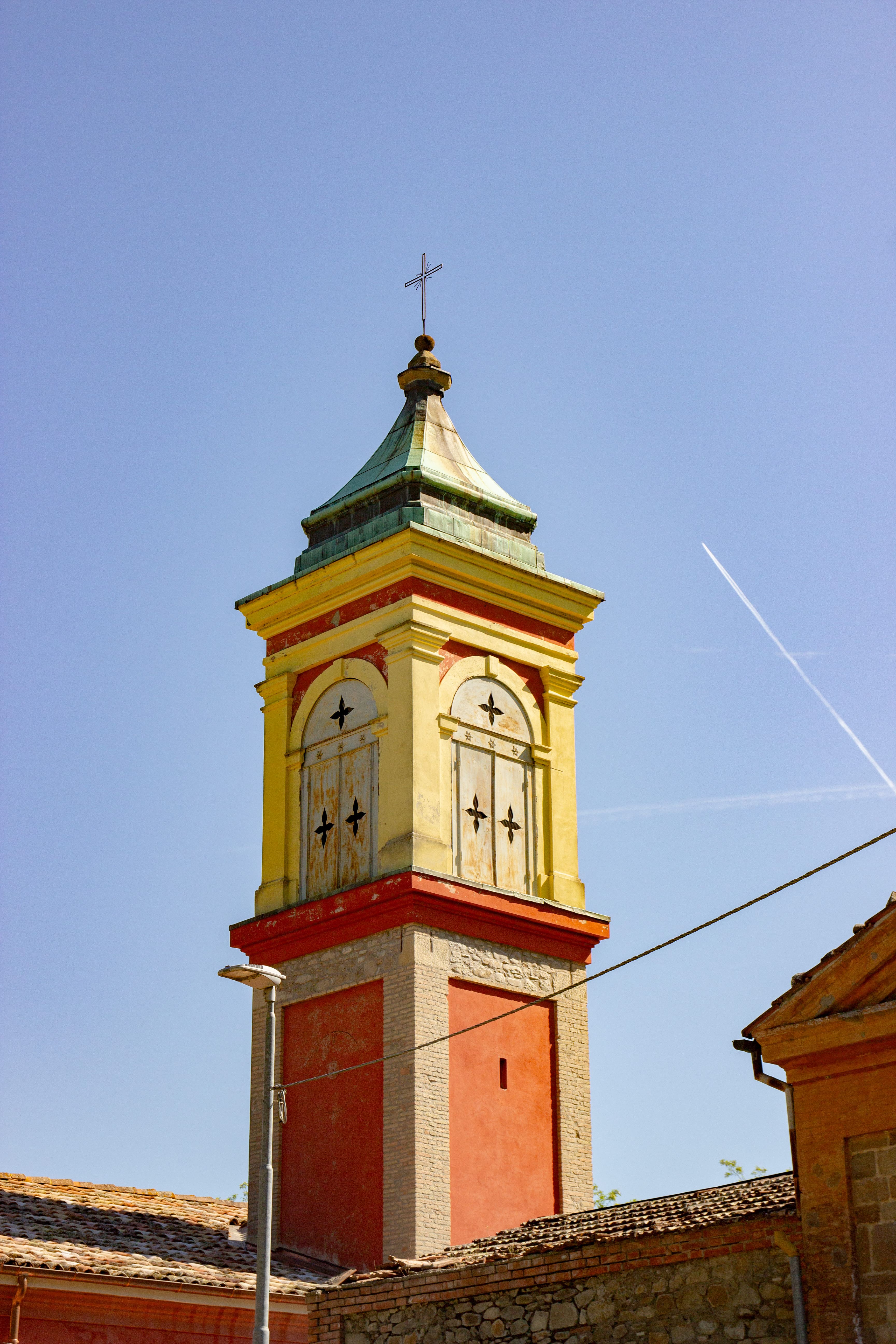
First stop: the Church of Sperticano
The walk's first stop was the Church of Sperticano, a quiet landmark on the slope of Monte Sole. Here, the group gathered to listen to a passage from the guide's chapter on Monte Sole, site of one of the most tragic episodes of the Italian Liberation war.
Following [the massacre of civilians], this treasure trove of mountains and valleys remained deserted for a long time. Torn between the pain of the survivors, the pitiful oblivion of the dead and attempts to return, hindered by the war devices that strewn the territory. A difficulty that has further exacerbated the tendency towards abandonment of the mountains typical of the post-war period.
Second stop: the Ruins of Caprara di Sopra
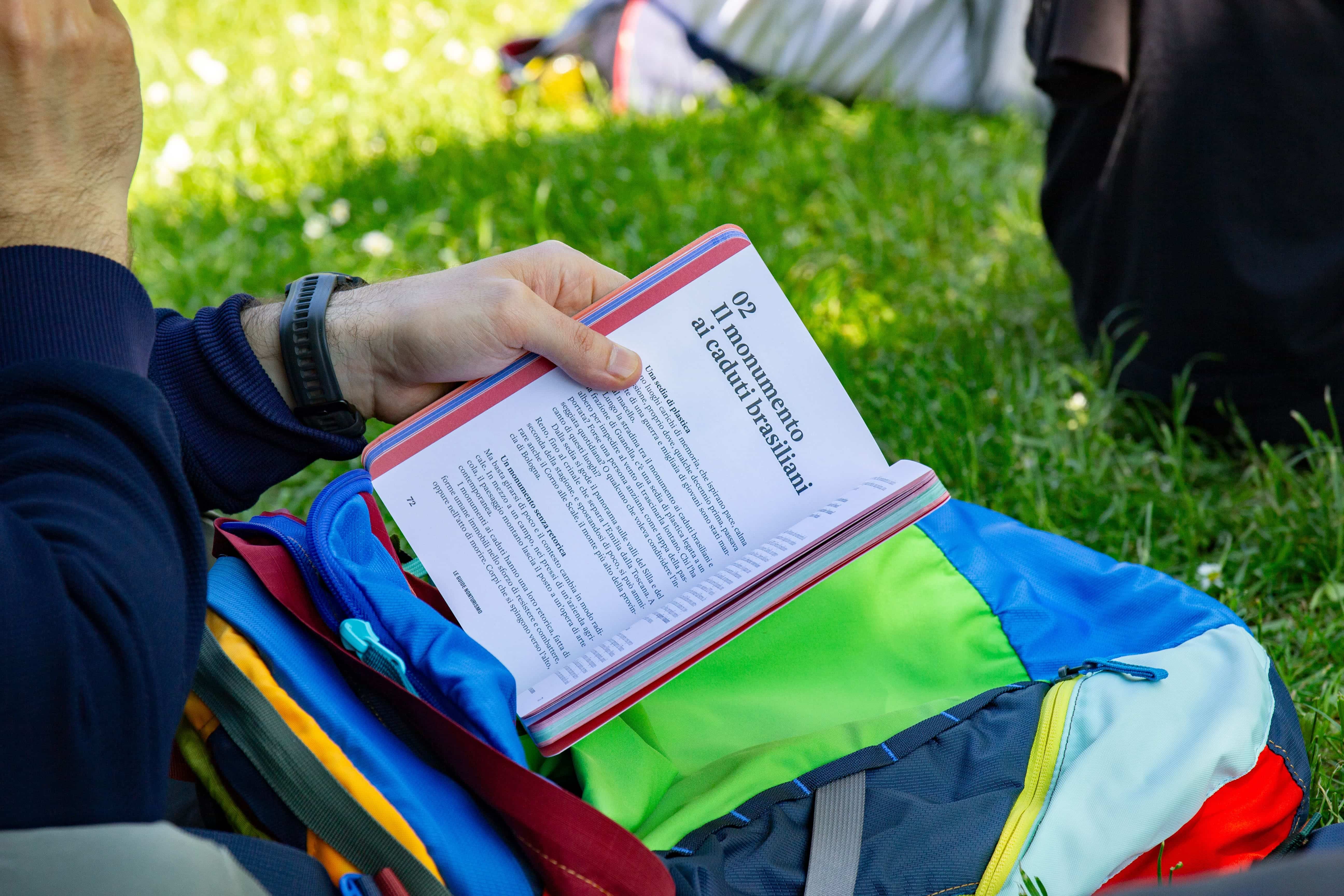
Continuing along the path, the group reached the Ruins of Caprara di Sopra, where a passage from the guidebook was read. In this stage of the walk, the chapter dedicated to the “Monument to the Fallen Brazilian Soldiers”, located in the area of the Western High Valleys, was shared with the participants:
In the middle of a field, near a farm, the mountain landscape gives way to a work of contemporary art. [...] in Gaggio Montano: two granite semicircles above a black cross frame the places where the very young soldiers of the FEB, the Brazilian Expeditionary Force, fought until the conquest of Monte Castello, an important German outpost on the Gothic Line. Brazilian sculptor Mary Vieira's work is titled Liberation: Open-Rhythm MPV. There are no bodies to celebrate, it is space that becomes a monument and finds, in the broken circle, liberation.
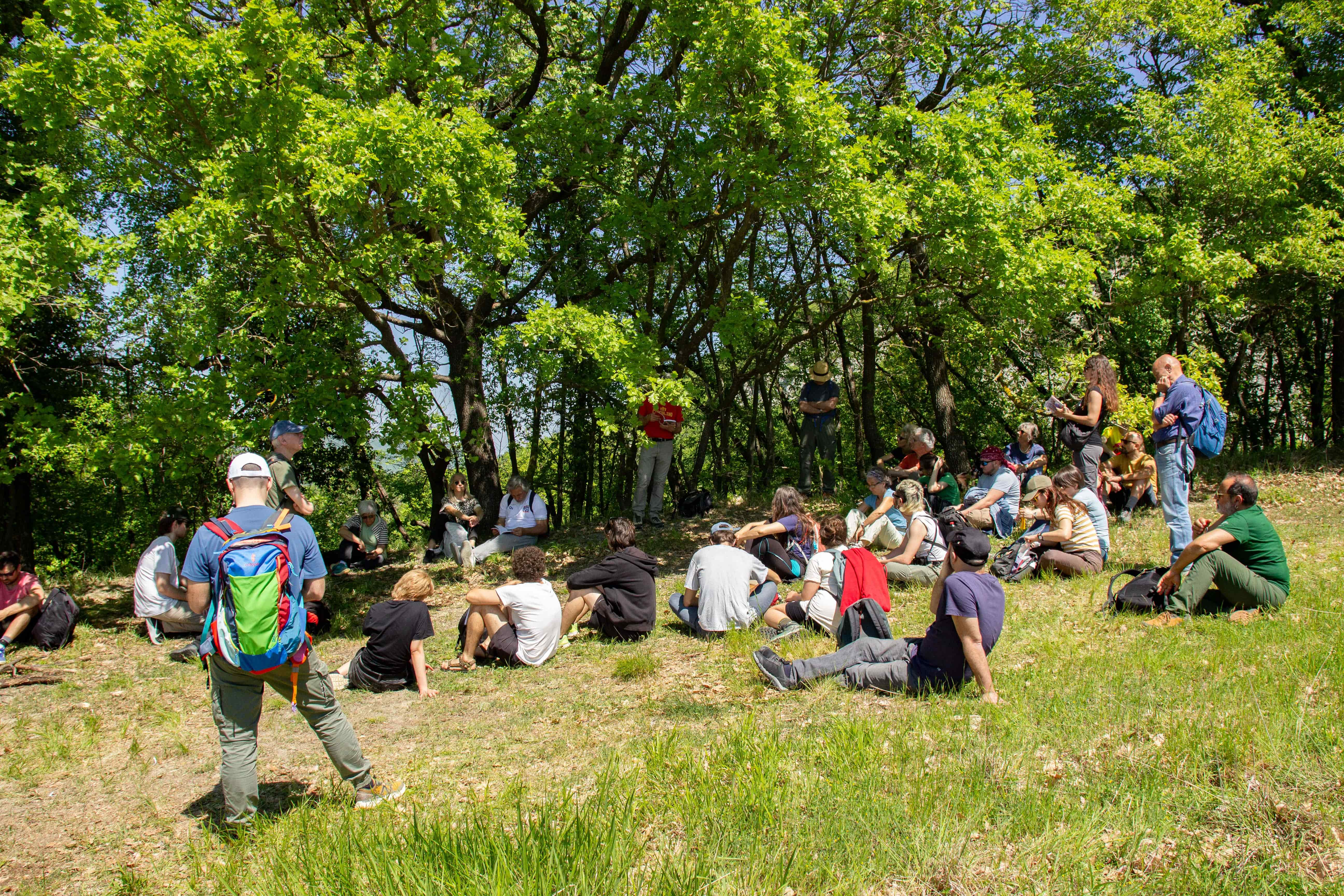
Third stop: Il Poggiolo – Rifugio Re_Esistente. A moment for silence.
The walk ended at Il Poggiolo – Rifugio Re_Esistente in Marzabotto, where participants were welcomed with lunch. Before sitting down together, the group read together a final passage from the chapter "Il Passo della Futa", on the theme of silence, linked the burial of the deads and the attempt of a German institute (the Volksbund Deutsche Kriegsgräberfürsorge) to collect and bury German soldiers’ bodies after the war:
If the cemeteries of the First World War could still be the scene of gestures of reconciliation between peoples, those intended for the German fallen of the Second World War stand in territories marked by occupation and perpetrated violence. For this reason, they are not spaces of celebration, but places of recollection and silence.
A silence which is not only restraint for the dead, but carries with it the burden of an invasion war, Nazi dictatorship, and genocide.
A NEB-based project
The Nonturismo guide to the Terre del Reno, Setta e Sambro is an editorial project by Sineglossa, produced with the support of the In Appennino project and in collaboration with the Unione dei Comuni dell'Appennino Bolognese. The project received backing from EIT Climate-KIC through the EIT NEB Enhance call of the EIT Community New European Bauhaus, alongside the support of Un altro Appennino è Possibile, Il Poggiolo – Rifugio Re_Esistente, and Officina 15.
The Nonturismo guides and the walk on 26 April embodied the core values of the New European Bauhaus in direct, tangible form: beauty, as the collective narration of the places turned into an artistic output, while keeping the focus on landscape, narrative and people; inclusion through a community-written guide that gives voice to those who inhabit fragile territories; and sustainability as they celebrate the practice of staying and caring for places, gently discovering them through slow, reading them aloud, and sharing with others.